Inheritance Rights of Foreigners in Turkey
Establishing a Company in Turkey as a Foreigner
Mart 12, 2025
Foreigners’ Rights to Access Healthcare Services in Turkey
Mart 12, 2025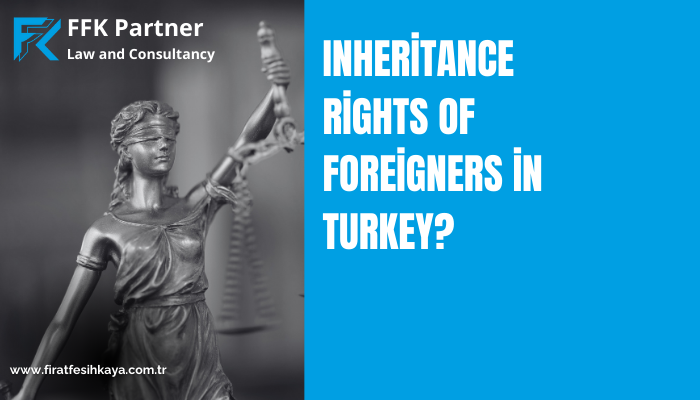
Legal Capacity of Foreigners to Inherit in Turkey
Foreign nationals have the legal right to inherit assets in Turkey. Turkish law does not prevent non-Turkish citizens from being designated as heirs, whether through statutory succession or testamentary dispositions. However, for foreign heirs to claim their inheritance, they must obtain a certificate of inheritance (veraset ilamı) from Turkish authorities. This document is essential for recognizing and validating their inheritance rights. Without it, transferring and registering inherited assets becomes legally impossible. The process ensures compliance with Turkish legal standards and establishes a clear legal pathway for foreign heirs.
Applicable Law for Inheritance by Foreigners
The law that governs an inheritance depends on the nationality of the deceased and the type of assets involved. According to Article 20 of Turkish International Private and Procedural Law (MÖHUK), the general rule is that the inheritance is subject to the deceased’s national law at the time of death. However, there is an important exception: immovable properties (real estate) located in Turkey are always governed by Turkish law, regardless of the deceased’s nationality. This means that even if a foreigner passes away, their real estate in Turkey will be distributed according to Turkish inheritance law, not their home country’s regulations. This ensures uniformity and legal consistency in property ownership within Turkey.
Restrictions on Foreigners Inheriting Real Estate in Turkey
Foreigners inheriting property in Turkey should be aware of certain legal restrictions on property acquisition. Turkish law limits the extent and nature of property ownership by foreigners. For instance, a foreign individual cannot own more than 10% of the total area within a given district. Additionally, properties located in military zones and other restricted areas cannot be inherited by foreigners. These restrictions are put in place to protect national security and maintain balanced land distribution. If an inherited property falls within these restricted zones, the foreign heir may be required to sell the property or transfer it to a legally permissible entity. More information on these restrictions can be accessed on.
Procedures for Foreign Heirs to Claim Their Inheritance
Foreign heirs must follow a formal legal process to claim their inheritance in Turkey. The first step is applying to the Turkish courts to obtain a certificate of inheritance. This application requires supporting documents such as:
- Proof of identity (passport or ID)
- The deceased’s death certificate
- Any existing will or testamentary documents
- Official translations and notarized copies of foreign documents
The legal process can be complex, and delays may arise if documents are not properly prepared. Seeking assistance from a Turkish inheritance lawyer can help navigate these procedures efficiently and prevent legal complications.
Taxation of Inherited Assets by Foreigners
Foreign heirs inheriting assets in Turkey are subject to inheritance and transfer tax, which is applied based on the value of the inherited assets. The tax rate varies depending on:
- The relationship between the deceased and the heir
- The total appraised value of the estate
Just like Turkish citizens, foreign heirs are required to declare and pay inheritance taxes within a specific timeframe. Failure to comply with tax obligations can result in fines or legal disputes. For optimal tax planning, it is highly recommended that foreign heirs consult a tax professional specialized in Turkish tax law.
Conclusion: Key Considerations for Foreign Heirs
In summary, Turkey allows foreign nationals to inherit property and assets, but the process is subject to specific legal and procedural requirements. Foreign heirs must obtain a certificate of inheritance, ensure compliance with property ownership restrictions, and fulfill tax obligations. Since real estate is always governed by Turkish law, foreign heirs should be aware of the potential implications of these rules on their inheritance rights. To avoid legal complications and expedite the inheritance process, it is advisable to seek legal and tax advice from professionals familiar with Turkish inheritance laws.
For more detailed information and legal assistance, FFK Partner Law Firm provides you with professional support!