How Can Foreign Organizations Protect Their Legal Status in Turkey? (2026 Legal Guide)

What Compliance Requirements Apply to Foreign Non-Profits in Turkey? (2026 Legal Guide)
Haziran 2, 2026
Insurance Compensation for Wrongful Denial of Business Interruption Claims (2026 Legal Guide)
Haziran 2, 2026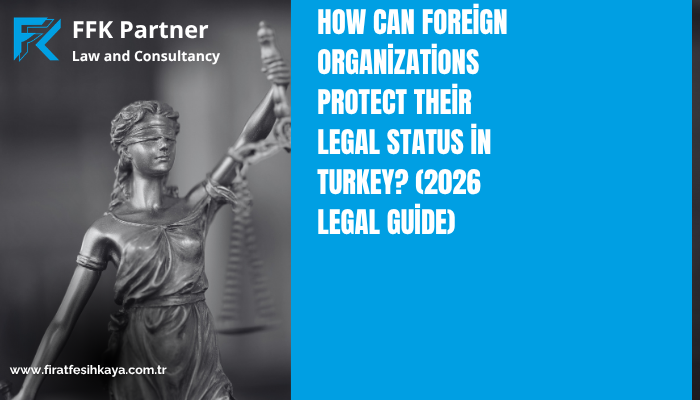
Learn how foreign organizations can protect their legal status in Turkey in 2026. Discover compliance requirements, registration obligations, foreign funding rules, reporting duties, employment regulations, tax compliance, governance standards, and legal risk management strategies.
Turkey remains an important destination for international non-governmental organizations (NGOs), foreign foundations, charitable institutions, international associations, humanitarian agencies, educational organizations, development programs, research entities, and multinational non-profit initiatives. Many foreign organizations establish a presence in Turkey to implement projects, provide humanitarian assistance, conduct research, support educational programs, and engage in international cooperation activities.
However, obtaining legal authorization to operate in Turkey is only the first step. Maintaining and protecting legal status requires continuous compliance with Turkish laws and regulations. Foreign organizations that fail to satisfy ongoing obligations may face administrative sanctions, financial penalties, restrictions on activities, suspension of operations, revocation of permissions, or reputational damage.
In 2026, Turkish authorities continue to strengthen oversight mechanisms through digital reporting systems, financial monitoring tools, employment compliance reviews, and regulatory inspections. As a result, foreign organizations must adopt proactive compliance strategies to preserve their legal standing and operational stability.
A well-structured compliance program is often the most effective tool for protecting legal status in Turkey.
Obtain Proper Authorization Before Operating
The foundation of legal protection begins with proper registration and authorization.
Foreign organizations should ensure that they have obtained all required approvals before commencing activities.
Depending on the organizational structure, this may involve:
- Branch office authorization
- Representative office approval
- Foundation registration
- Association registration
- Project-specific permissions
Operating without the required authorization represents one of the fastest ways to jeopardize legal status.
Organizations should regularly review whether existing approvals remain valid and sufficient for their activities.
Maintain Accurate Organizational Records
Accurate documentation is essential for protecting legal status.
Organizations should maintain:
- Registration certificates
- Organizational charters
- Articles of association
- Board resolutions
- Authorization documents
- Internal policies
Regulatory authorities may request these documents during inspections, audits, or reporting reviews.
Incomplete or outdated records can create compliance risks and administrative difficulties.
Proper document management should be a priority.
Comply With Reporting Obligations
Many foreign organizations are subject to periodic reporting requirements.
Common obligations may include:
- Annual activity reports
- Financial reports
- Organizational updates
- Regulatory notifications
Failure to satisfy reporting requirements may lead to:
- Administrative penalties
- Increased inspections
- Regulatory investigations
- Questions regarding organizational compliance
Timely and accurate reporting helps demonstrate transparency and accountability.
Organizations should implement internal systems to monitor filing deadlines.
Ensure Foreign Funding Compliance
Foreign funding remains one of the most closely monitored aspects of NGO operations in Turkey.
Organizations receiving international financial support should ensure compliance with:
- Notification requirements
- Reporting obligations
- Banking regulations
- Documentation standards
Authorities increasingly emphasize transparency concerning the origin and use of foreign funds.
Maintaining detailed funding records helps reduce compliance risks and facilitates regulatory reviews.
Maintain Financial Transparency
Financial transparency plays a critical role in protecting legal status.
Organizations should maintain:
- Accurate accounting records
- Banking documentation
- Grant agreements
- Donation records
- Expense reports
Financial records should clearly demonstrate how funds are received, managed, and spent.
Transparency helps build trust with regulators, donors, beneficiaries, and partner organizations.
Strong financial management systems are essential.
Establish Effective Governance Structures
Weak governance frequently contributes to compliance failures.
Organizations should adopt governance systems that clearly define:
- Board responsibilities
- Executive authority
- Financial oversight procedures
- Conflict-of-interest rules
- Internal controls
Effective governance improves accountability and helps ensure compliance with legal obligations.
Regulators often view strong governance as evidence of organizational reliability.
Protect Employment Compliance
Organizations employing staff in Turkey must comply with labor law requirements.
Important obligations include:
- Employment contracts
- Payroll administration
- Social security registration
- Occupational health and safety compliance
- Employee rights protections
Employment-related violations can create significant financial and legal exposure.
Human resources compliance should therefore be reviewed regularly.
Monitor Work Permit Requirements
Foreign personnel generally require valid work authorization before performing employment activities in Turkey.
Organizations should ensure that:
- Work permits are obtained before employment begins
- Renewals are submitted on time
- Immigration records remain accurate
- Employment activities remain consistent with permit conditions
Work permit violations may affect both the organization and the employee.
Continuous monitoring is essential.
Fulfill Social Security Obligations
Employers must generally register employees with the Turkish Social Security Institution.
Compliance includes:
- Employee registration
- Contribution payments
- Payroll reporting
- Insurance obligations
Digital government systems increasingly allow authorities to verify compliance quickly.
Failure to satisfy social security obligations may result in substantial penalties.
Maintain Tax Compliance
Even non-profit organizations may have tax-related obligations.
Potential areas requiring attention include:
- Payroll taxes
- Withholding obligations
- VAT-related matters
- Commercial activity taxation
- Property taxes
Organizations should conduct periodic tax reviews to ensure ongoing compliance.
Professional accounting and legal support often provide significant value.
Comply With Data Protection Regulations
Many foreign organizations process personal data relating to:
- Employees
- Beneficiaries
- Donors
- Volunteers
- Researchers
- Students
Compliance with Turkish data protection laws is essential.
Organizations should implement:
- Privacy policies
- Data security measures
- Access controls
- Data processing procedures
Data breaches can result in legal liabilities and reputational harm.
Data protection should therefore be integrated into overall compliance programs.
Implement Anti-Money Laundering Controls
International organizations handling substantial financial resources should establish procedures designed to reduce financial compliance risks.
Important measures may include:
- Source-of-funds verification
- Transaction monitoring
- Internal approval procedures
- Documentation controls
Authorities increasingly focus on financial transparency and accountability.
Robust controls help protect both legal status and organizational reputation.
Prepare for Regulatory Inspections
Foreign organizations should assume that inspections may occur at any time.
Authorities may review:
- Financial records
- Employment documentation
- Funding records
- Governance procedures
- Reporting compliance
Preparation is critical.
Organizations that maintain organized records and clear procedures generally navigate inspections more efficiently.
Inspection readiness should be treated as an ongoing compliance objective.
Carefully Manage Partnerships
Foreign organizations frequently collaborate with:
- Local NGOs
- Foundations
- Universities
- Municipalities
- Contractors
- Service providers
Third-party relationships can create significant legal risks.
Organizations should conduct due diligence before entering partnerships and monitor compliance throughout the relationship.
Written agreements are strongly recommended.
Protect Intellectual Property Rights
International organizations often possess valuable intellectual property, including:
- Educational materials
- Research findings
- Trademarks
- Databases
- Publications
Protecting intellectual property helps preserve organizational assets and operational integrity.
Organizations should adopt strategies to prevent unauthorized use and infringement.
Develop Internal Compliance Policies
One of the most effective ways to protect legal status is through formal compliance policies.
Policies may address:
- Financial management
- Employment practices
- Data protection
- Anti-corruption measures
- Reporting obligations
- Governance procedures
Written policies help create organizational consistency and demonstrate commitment to compliance.
Conduct Regular Legal Reviews
Legal requirements evolve over time.
Organizations should periodically review:
- Registration status
- Reporting obligations
- Employment compliance
- Tax obligations
- Data protection practices
- Funding arrangements
Regular legal audits help identify risks before they become serious problems.
Preventive action is generally less expensive than responding to regulatory violations.
Monitor Regulatory Developments
The legal environment governing foreign organizations continues to evolve.
Organizations should remain informed regarding:
- Legislative amendments
- Regulatory guidance
- Reporting requirements
- Employment regulations
- Tax developments
Monitoring legal changes allows organizations to adapt proactively and maintain compliance.
Ignoring regulatory developments can create unnecessary risks.
Legal Developments Affecting Foreign Organizations in 2026
In 2026, Turkish authorities continue emphasizing transparency, accountability, foreign funding oversight, employment compliance, tax reporting, and data protection. Digital compliance systems increasingly enable authorities to cross-check information submitted to different government institutions, making accuracy and consistency more important than ever.
Organizations that invest in governance, compliance infrastructure, and professional legal support are generally better positioned to preserve their legal status and maintain long-term operational stability in Turkey.
Protecting legal status requires continuous effort, but it remains one of the most important investments an international organization can make.
Frequently Asked Questions (FAQ)
1. What is the most important step in protecting legal status?
Obtaining and maintaining proper authorization is the foundation of legal compliance.
2. Are reporting obligations mandatory?
Yes. Many foreign organizations are subject to periodic reporting requirements.
3. Can foreign funding affect legal status?
Yes. Funding activities must generally comply with applicable reporting and transparency requirements.
4. Why is governance important?
Strong governance improves accountability and reduces compliance risks.
5. Do employment violations threaten legal status?
Potentially yes. Labor law and work permit violations may result in serious penalties.
6. Are social security obligations mandatory?
Yes. Employers generally must comply with social security registration and contribution requirements.
7. Must foreign organizations comply with data protection laws?
Yes. Organizations processing personal data must satisfy applicable legal requirements.
8. Can organizations be audited?
Yes. Regulatory inspections and audits are common compliance tools.
9. How often should legal compliance be reviewed?
Organizations should conduct periodic reviews and compliance audits regularly.
10. Should foreign organizations obtain ongoing legal support?
Yes. Continuous legal guidance often helps prevent costly compliance failures and regulatory disputes.
Legal Support for Foreign Organizations Operating in Turkey
Foreign organizations operating in Turkey face complex obligations involving registration requirements, reporting duties, employment law, work permits, foreign funding compliance, tax regulations, governance standards, and data protection rules. Professional legal assistance can help organizations establish effective compliance systems and protect their legal status.
Legal Support and Compliance Services
If your organization plans to establish or maintain a branch office, representative office, humanitarian program, educational initiative, charitable project, development activity, or international operational presence in Turkey, professional legal guidance can help ensure ongoing compliance with Turkish law.
An experienced legal team can assist with registration procedures, regulatory approvals, governance structures, reporting obligations, employment compliance, work permits, foreign funding regulations, tax matters, data protection compliance, internal audits, and regulatory inspections.
Phone: +90 312 434 22 22
Mobile / WhatsApp: +90 532 769 22 22
E-mail: info@firatfesihkaya.av.tr
Address: Yildirim Tower, Mevlana Boulevard No:221, Office No:148, 06520 Balgat, Cankaya, Ankara, Turkey
FFK Partner Law Firm provides comprehensive legal services to international NGOs, foreign foundations, humanitarian organizations, charitable institutions, development agencies, educational entities, and international non-profit organizations seeking compliance, regulatory, and operational solutions in Turkey.