White Collar Crimes in Turkey: A Guide for Foreign Investors (2026)

Commercial Fraud in Turkey: Legal Consequences for Foreigners (2026 Guide)
Mart 30, 2026
Criminal Liability of Company Directors in Turkey (2026 Legal Guide)
Mart 30, 2026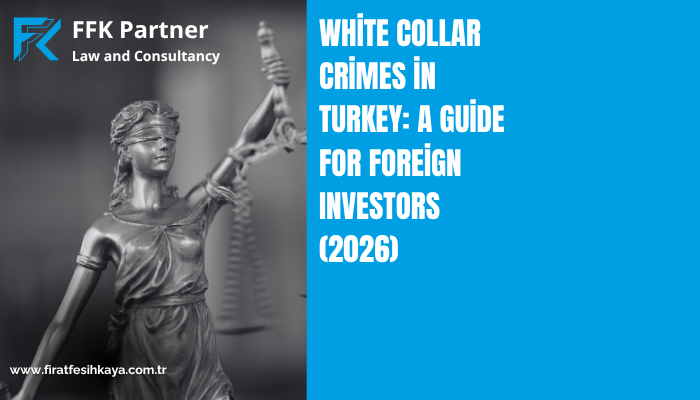
A comprehensive 2026 guide to white collar crimes in Turkey for foreign investors. Learn offenses, penalties, investigations, and legal defense strategies.
White collar crimes represent one of the most critical legal risks for foreign investors operating in Turkey. As financial systems become more digitized and regulatory oversight intensifies, Turkish authorities have significantly strengthened enforcement against financial and corporate misconduct in 2026.
For foreign business owners, executives, and investors, white collar crimes are not limited to intentional wrongdoing. Many cases arise from compliance failures, misunderstandings of local regulations, or improper internal controls. However, the legal consequences can be severe, including criminal prosecution, financial penalties, and reputational damage.
Understanding the legal framework is essential for operating safely within the Turkish market. These risks must be managed under commercial law, often with the guidance of a commercial lawyer.
This guide provides a detailed overview of white collar crimes in Turkey, including common offenses, legal consequences, investigation procedures, and strategies to mitigate risk.
What Are White Collar Crimes?
White collar crimes refer to non-violent offenses committed in a business or professional context, typically for financial gain.
These crimes often involve:
- Fraud and deception
- Financial manipulation
- Abuse of corporate authority
- Violations of regulatory obligations
In Turkey, white collar crimes are treated seriously and may result in both criminal and civil liability.
Legal Framework for White Collar Crimes in Turkey
White collar crimes are regulated under criminal and commercial legislation.
Authorities have increased enforcement through:
- Digital financial monitoring
- Data sharing between institutions
- International cooperation
In 2026, Turkey continues to align its enforcement practices with global standards, making compliance essential for foreign investors.
Common Types of White Collar Crimes
Foreign investors may encounter or be exposed to several types of white collar crimes.
The most common include:
- Corporate fraud
- Tax evasion
- Bribery and corruption
- Money laundering
- Insider trading
- Embezzlement
Each offense carries different legal consequences and requires specific compliance measures.
Corporate Fraud and Mismanagement
Corporate fraud involves deceptive practices within a company to gain financial advantage.
This may include:
- Misrepresentation of financial statements
- Misuse of company assets
- False reporting
Company directors and managers may be held personally liable for such actions.
Tax Evasion and Financial Crimes
Tax evasion is one of the most frequently prosecuted white collar crimes.
This includes:
- Underreporting income
- Using false invoices
- Concealing financial transactions
In 2026, tax authorities use advanced digital systems to detect irregularities, increasing enforcement efficiency.
Bribery and Corruption
Bribery and corruption offenses involve offering or receiving improper benefits to influence decisions.
These offenses are taken seriously and may lead to:
- Criminal prosecution
- Heavy fines
- Business restrictions
Foreign investors must ensure strict compliance with anti-corruption rules.
Money Laundering Risks
Money laundering involves disguising the origin of illegal funds.
Authorities actively monitor financial transactions to detect suspicious activities.
Businesses must implement compliance measures to prevent involvement in such activities.
Criminal Liability for Foreign Investors
Foreign investors are fully subject to Turkish criminal law.
This means they may face:
- Criminal investigations
- Prosecution
- Imprisonment
- Financial penalties
In addition, immigration consequences such as deportation or entry bans may apply.
Investigation Process
White collar crime investigations may be initiated through:
- Complaints
- Financial audits
- Regulatory reports
- Banking alerts
Authorities may conduct:
- Financial analysis
- Document review
- Interviews
If sufficient evidence is found, criminal proceedings are initiated.
Civil Liability and Compensation Claims
In addition to criminal consequences, white collar crimes may result in civil liability.
Victims may seek:
- Compensation for damages
- Recovery of losses
- Contract termination
Civil and criminal proceedings may occur simultaneously.
Penalties and Legal Consequences
Penalties for white collar crimes in Turkey may include:
- Imprisonment
- Judicial fines
- Asset seizure
- Business restrictions
The severity depends on the nature of the offense and the level of intent.
Compliance Strategies for Foreign Investors
Preventing white collar crimes requires proactive compliance measures.
Businesses should:
- Implement internal control systems
- Maintain accurate financial records
- Conduct regular audits
- Train employees on compliance
- Monitor regulatory changes
Working with a commercial lawyer ensures that compliance systems are effective.
Role of a Commercial Lawyer in Risk Management
A commercial lawyer provides critical support in preventing and managing white collar crime risks.
This includes:
- Legal risk assessment
- Compliance program development
- Representation in investigations
- Defense in criminal proceedings
Professional legal guidance helps protect your business and personal interests.
Importance of Legal Awareness in 2026
In 2026, increased transparency, digital monitoring, and global cooperation have significantly raised the risks associated with white collar crimes.
Foreign investors must understand that compliance is not optional. Even minor violations may lead to serious consequences.
Legal awareness and proactive measures are essential for long-term success in Turkey.
Frequently Asked Questions (FAQs)
1. What are white collar crimes in Turkey?
Non-violent financial or corporate offenses such as fraud and tax evasion.
2. Can foreign investors be prosecuted?
Yes, they are fully subject to Turkish law.
3. What are the penalties?
Penalties include imprisonment, fines, and business restrictions.
4. How are these crimes detected?
Through audits, financial monitoring, and regulatory oversight.
5. Can companies be held liable?
Yes, both individuals and companies may face consequences.
6. Are there civil consequences?
Yes, victims may claim compensation.
7. Can risks be prevented?
Yes, through strong compliance systems.
8. Is legal support necessary?
Yes, especially for foreign investors.
Legal Support & Contact
White collar crime risks in Turkey require careful legal planning and proactive compliance strategies. For foreign investors, working with an experienced law firm ensures that your business operates safely and within legal boundaries.
Professional legal support protects your investments, minimizes risks, and provides strategic defense in case of legal issues.
Professional Legal Support – Contact Us
- Phone: +90 312 434 22 22
- WhatsApp: +90 532 769 22 22
- Email: info@firatfesihkaya.av.tr
- Address: Mevlana Blvd. No:221 Yıldırım Tower No:148, 06520 Balgat/Çankaya/Ankara, Turkey